RESEARCH
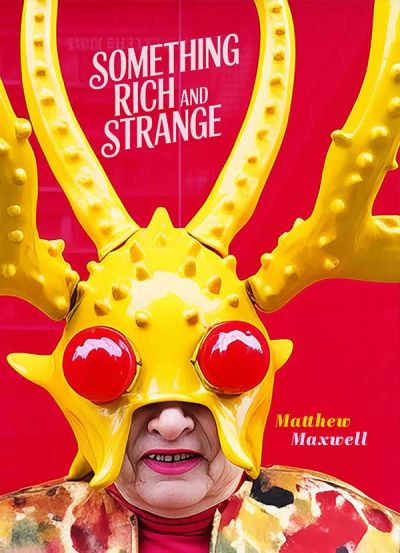
Something Rich and Strange
My PhD research questioned the creative potential of Generative Artificial Intelligence (GenAI) in a visual art practice. To stimulate human/computer creative collaboration I introduced the imaging power of GenAI models to the words of William Shakespeare (1564 –1616). Text, themes, and lyrics written or performed in the years 1597-99 (when the poet was living and working in the London district of Shoreditch), are used as prompts in a ‘Creative Cybernetic’, psycho-geographic process of procedural interaction.
This collaboration between creative entities: living, dead, organic and computational, aimed to reveal something of the genius loci – the persistent Character of Place – that impacts the emotions and behaviours of individuals who pass through it over time (Ackroyd, 2001, Debord 1955). The research poses questions of authenticity, authorship, and how creative agency can be attributed. (Boden 2009, Kalpokiene & Kalpokas, 2023).
It proposes a collaborative role for artists as creative agents in a posthuman ‘cyborgian’ world (Haraway 1985) and examines the role of artistic practice in ‘bringing-forth out of concealment’ the underlying truths concerning the world-as-is that are revealed when technology is used not to satisfy a ‘will-to-mastery’ but as ‘a mode of revealing’. through creative industry (Heidegger 1954).
CONTRIBUTIONS TO KNOWLEDGE
Creative Cybernetics
Creative Cybernetics
Creative Cybernetics
Firstly, a practice methodology I term Creative Cybernetics. This way of working couples the feedback loops inherent in both living organisms and system design with the poetic, non-linear leaps of human creativity. This is positioned as an epistemological framework for understanding posthuman creativity, but also as a working method suitable for use in other creative fields. It proposes a means of collaborative interaction between human and non-human creative agents.
Psycho-geography
Creative Cybernetics
Creative Cybernetics
Secondly, it extends the tradition of psycho‑geographic dérive – the objective-free wanderings proposed by Debord and the Situationists – into a posthuman sensibility by showing that non‑conscious systems also drift, dream and annotate the imagined city in a ‘desrêves’. This encourages GenAI to wander through its data-scape as in a dream, combining and transforming without rationally intervening. The intention is to surface the system’s oneiric imaginings and through them better understand GenAI’s cognitive nature.
Essence of Playce
Essence of Playce
Essence of Playce
Thirdly, I introduce the term ‘Essence of Playce’ as both concept and process. This nodal intersection reveals the dynamic interaction of place, time, technology, and culture, achieved through speculative imaginings detached from functional purpose. It culminates in an exhibition held on April 23, 2025, (the presumed anniversary of Shakespeare’s birth and death) sited at the historical epicentre of Shakespearean theatre at 55 Curtain Road in London's Shoreditch.
Art Work
Essence of Playce
Essence of Playce
Fourthly, I have produced new artworks which articulate and extend these themes. These are audio/video and 2-dimensional work employing ‘creative cybernetic’ dialogues between GenAI and myself, taking Shoreditch as a common theme. This dialogue is intentionally non-linear and dreamlike in order to limit any rationalised constraints I might inadvertently bring to bear, as well as to fully utilise the desrêves of GenAI.
BIBLIOGRAPHY
AA School of Architecture (2017), Refik Anadol: Space in the Mind of a Machine. Available at: youtube.com/watch?v=nMJU_BLsKAA%20(Accessed: 16/12/2025).
Ackroyd, P. (1985) Hawksmoor. London: Hamish Hamilton.
Ackroyd, P. (2000) London: The Biography. London: Chatto & Windus.
Adams, J.Q (1917) Shakespearean Playhouses: A History of English Theatres from the Beginnings to the Restoration. Reprinted, 1960, London, Houghton Mifflin co.
Anantrasirichai, N., Bull, D. (2022) ‘Artificial intelligence in the creative industries: a review.’ Artif Intell Rev 55, 589–656 https://doi.org/10.1007/s10462-021-10039-7
Anfam, D. (1990) Abstract Expressionism. (World of Art). London: Thames & Hudson.
Arantes, J. and Vicars, M. (2023) ‘Rescripting creativity after automation: situating the simulacrum to interpret the queerness of computational creativity.’ Qualitative Research Journal (2023) 23 (5): 515–528.https://doi.org/10.1108/QRJ-01-2023-0012
Baars, B.J. (1986) The Cognitive Revolution in Psychology. New York: Guilford Press.
Barad, K. (2003) ‘Posthumanist performativity: toward an understanding of how matter comes to matter’, Signs,28(3), pp. 801–831. https://doi.org/10.1086/345321
Barad, K. (2007) Meeting the Universe Halfway: Quantum Physics and the Entanglement of Matter and Meaning. Durham, NC: Duke University Press.
Barnes, T. J. (2004). ‘Placing ideas: genius loci, heterotopia and geography’s quantitative revolution.’ Progress in Human Geography, 28(5), 565-595.
https://doi.org/10.1191/0309132504ph506oa
Bate, J. (2007) The RSC Shakespeare: The Complete Works. Basingstoke: Macmillan.
Bate, J. (2009) Soul of the Age: The Life, Mind and World of William Shakespeare. London: Penguin.
Bateson, G. (1979) Mind and Nature: A Necessary Unity. New York: Dutton.
Bender, E. M., Gebru, T., McMillan-Major, A., & Shmitchell, S. (2021). ‘On the Dangers of Stochastic Parrots: Can Language Models Be Too Big? In Proceedings of the 2021 ACM Conference on Fairness, Accountability, and Transparency (FAccT’21)’ pp. 610-623. Association for Computing Machinery. https://doi.org/10.1145/3442188.3445922
Björneborn, L. (2023) ‘Adjacent possible’, The Palgrave Encyclopaedia of the Possible.Palgrave Macmillan. Editor: Glăveanu, V. pp. 16-28
Blaisdell, A.P., Cook, R.G. (2005). Two-item same-different concept learning in pigeons. Learning & Behavior 33, 67–77 https://doi.org/10.3758/BF03196051
Boden, M.A. (1990) The Creative Mind: Myths and Mechanisms. London: Weidenfeld & Nicolson.
Boden, M.A. (2009) ‘Computer models of creativity’, AI Magazine, 30(3), pp. 23–34. DOI:10.1609/aimag.v30i3.2254
Boyer, P. et al. (2013) ‘Archaeological investigations at 103–106 Shoreditch High Street, Hackney’, Transactions of the London and Middlesex Archaeological Society, 64, pp. 210–252. https://doi.org/10.5284/1007494
Bozzi, N. (2023) ‘Machine vision and tagging aesthetics: assembling socio-technical subjects through new media art’, Open Library of Humanities, University of Greenwich 9(2), pp. 1–25. https://doi.org/10.16995/olh.10023
Breton, A. (1924) Manifestoes of Surrealism. Translated by R. Seaver and H.R. Lane. (1978) Ann Arbor: University of Michigan Press.
Brook, P. (1998) Evoking Shakespeare. London: Faber & Faber.
Bryson, B. (2007) Shakespeare: The World as Stage. London: Allen Lane.
Bulik, V.V. (2007) Database Aesthetics: Art in the Age of Information Overflow. Minneapolis, MN: University of Minnesota Press.
Bunz, M. (2019) ‘The calculation of meaning: on the misunderstanding of new artificial intelligence as culture’, Culture, Theory and Critique, 60(3–4), pp. 264–278. https://doi.org/10.1080/14735784.2019.1667255
Calle, S. (1983) Suite Vénitienne. Paris: Éditions de l’Étoile.
Cappio, J. (2011) Romeo and Juliet: Mercutio’s misogyny, Shakesyear. Available at: https://shakesyear.wordpress.com/2011/06/20/romeo-and-juliet-mercutios-misogyny-part-1-of-2/(Accessed 02/12/2024).
Caramiaux, B. and Donnarumma, M., 2021. Artificial intelligence in music and performance: a subjective art-research inquiry. In Handbook of artificial intelligence for music: Foundations, advanced approaches, and developments for creativity (pp. 75-95). Springer International Publishing.
Çakirlar, C. (2011) ‘Masculinity, scatology, mooning and the queer/able art of Gilbert & George: on the visual discourse of male ejaculation and anal penetration.’ Paragraph, 34(1), pp. 86–104. Edinburgh University Press. https://doi.org/10.3366/para.2011.0007
Carlini, N., et al (2023) ‘Extracting training data from diffusion models.’ 32nd USENIX security symposium (USENIX Security 23) pp. 5253-5270. https://doi.org/10.48550/arXiv.2301.13188
Chalmers, D. (1995) ‘Absent qualia, fading qualia, dancing qualia’, Consciousness: Psychological and Philosophical Essays. Metzinger, T. (ed.) Cambridge, MA: MIT Press.
Chandler, S.B. (1955) ‘Shakespeare and sleep’, Bulletin of the History of Medicine. (29) pp. 255–260.
Chang, V. (2020) ‘Prosthetic memories, writing machines’ Noema, (3 December) Available at: https://www.noemamag.com/prosthetic-memories-writing-machines (Accessed: 16/12/2023)
Chiang, T. (2024) ‘Why A.I. isn’t going to make art.’ The New Yorker. Available at: https://www.newyorker.com/culture/the-weekend-essay/why-ai-isnt-going-to-make-art
(Accessed 14/06/224.)
Chomsky, N. (1995) Language and Problems of Knowledge. Cambridge, MA: MIT Press.
Cohen, P. (2016) ‘Harold Cohen and AARON’, AI Magazine, 37(4), pp. 63–66.
Cruickshank, D. (2016) Spitalfields. London: Random House.
Cummins, B. et al. (2012) ‘A spatial model of mosquito host seeking behavior.’ PLOS Computational Biology, 8(5), https://doi.org/10.1371/journal.pcbi.1002500
Danto, A. C. (1981) The Transfiguration of the Commonplace: A Philosophy of Art. Cambridge, MA: Harvard University Press.
Debord, G. (1955) ‘Introduction to a Critique of Urban Geography’. Translation by Ken Knabb: Situationist International Anthology, pp. 5-8. Revised and Expanded Edition, PM Press, 2024.
Debord, G. (1956) ‘Theory of the Dérive and other situationist writings on the City’. Museu d’Art Contemporani de Barcelona. Adreotti, L. and Costa, X. editors. (1997) pp. 22-28
Demopoulos, A. (2023) ‘Free the nipple: Facebook and Instagram told to overhaul ban on bare breasts.’ The Guardian, Accessed: 18 /01/2023.
Derrida, J. (1978) The Truth in Painting. Chicago, IL: University of Chicago Press.
Dietrich, F. (1983) Visual Intelligence: The First Decade of Computer Art. New York, NY: Harcourt Brace Jovanovich.
Duncan, S. (2023) Searching for Juliet. London: Bloomsbury Publishing.
Durham, G. (2023) ‘Text to image AI generators: familiar legal questions about this novel and fast-growing technology’. The Computer & Internet Lawyer. Available at: https://www.dlapiper.com/en/insights/publications/intellectual-property-news/2023/text-to-image-ai-generators-familiar-legal-questions-about-this-novel-fast-growing-technology(Accessed, 20/06/2025)
du Sautoy, M. (2020) The Creativity Code: How AI Is Learning to Write, Paint and Think. London: 4th Estate (Harper Collins).
Dusinberre, J. (2009) ‘Boys Should be Girls: Shakespeare's Female Roles and the Boy Players.’ New Theatre Quarterly 25(02) pp.172 – 177, DOI:10.1017/S0266464X09000268
Elam, M. (2022) ‘Signs taken for wonders: AI, art & the matter of race’, Daedalus, 151(2), pp. 198–217. https://doi.org/10.1162/daed_a_01910
Elias, A. J. (2010) ‘Psychogeography, détournement, cyberspace’, New Literary History, 41(4), pp. 821–845. 10.1353/nlh.2010.0033
El-Kaddoury, M., Mahmoudi, A. and Himmi, M. M. (2019) ‘Deep generative models for image generation: a practical comparison between variational autoencoders and generative adversarial networks.’ Lecture Notes in Computer Science, vol. 11557. Cham: Springer, p. 1-8. https://doi.org/10.1007/978-3-030-22885-9_1
Elgammal, A. et al.(2017) ‘CAN: Creative Adversarial Networks, generating “art” by learning about styles and deviating from style norms.’ International Conference on Computational Creativity 10.48550/arXiv.1706.07068
Esposito, P., Atighehchian, P., Germanidis, A. and Ghadiyaram, D. (2023). ‘Mitigating stereotypical biases in text to image generative systems.’ arXiv preprint arXiv:2310.06904.
Esser, P. (2023) ‘Structure and content guided video synthesis with diffusion models.’ Proceedings of the IEEE/CVF International Conference on Computer Vision (ICCV), DOI:10.1109/ICCV51070.2023.00675
Ekperi, M. D. (2024) ‘Martin Heidegger on technology: implications for artificial intelligence.’ South-South Journal of Humanities and international Studies Niger Delta University DOI:10.5281/zenodo.13911577
Figal, G. (2015) Independence of things: Heidegger’s Bremen lectures once more. Mohr Siebeck, DOI:10.1628/978-3-16-167861-5
Foakes, R. A. (2006) Playhouses and Players. Cambridge University Press
Forbes, A. (2020). ‘Creative AI: From Expressive Mimicry to Critical Inquiry.’ Artnodes. DOI: 10.7238/a.v0i26.3370.
Foucault, M. (2006) The Order of Things: An Archaeology of the Human Sciences. London: Routledge.
Galanter, P. (2019) ‘Artificial intelligence and problems in generative art theory.’ Proceedings of EVA London 2019. London: EVA London, pp. 112–118. DOI: 10.14236/ewic/EVA2019.22
Galanter, P. (2020) ‘Towards ethical relationships with machines that make art.’ Artnodes, 26. Texas A&M University DOI:10.7238/a.v0i26.3371
Gladwell, M. (2000) ‘The art of failure.’ The New Yorker, Available at: https://www.newyorker.com/magazine/2000/08/21/the-art-of-failure (Accessed 04/09/2024)
Goodman, R. (2015) How to Be a Tudor. London: Penguin.
Haraway, D. (1985) ‘A manifesto for cyborgs: Science, technology, and socialist feminism in the 1980s.’ The Postmodern Turn: New Perspectives on Social Theory. Seidman S, ed. Cambridge University Press; 1994, pp. 82-116.
Haraway, D.J. (2016) Staying with the Trouble: Making Kin in the Chthulucene. Duke University Press.
Hayles, N. K. (1999) How We Became Posthuman: Virtual Bodies in Cybernetics, Literature, and Informatics.Chicago, IL: University of Chicago Press.
Heidegger, M. (1962) Being and Time. Translated by J. Macquarrie and E. Robinson. Oxford: Blackwell.
Heidegger, M. (1966) Discourse on Thinking: A Translation of Gelassenheit. Translated by J. M. Anderson and E. H. Freund. New York, NY: Harper & Row.
Heidegger, M. (1978) Basic Writings, Edited by D. F. Krell. San Francisco, CA: Harper & Row.
Heikkilä, M. (2022) ‘This artist is dominating AI-generated art. And he’s not happy about it’. MIT Technology Review. Available at: https://www.technologyreview.com/2022/09/16/1059598/this-artist-is-dominating-ai-generated-art-and-hes-not-happy-about-it/ (Accessed: 12/12/2025)
Heisenberg, W. (1958) Physics and Philosophy: The Revolution in Modern Science. London: Harper.
Helms, L. (1989) ‘Playing the woman’s part: feminist criticism and Shakespearean performance’. Theatre Journal, 41(2), pp. 190 https://doi.org/10.2307/3207858
Higgins, K. (2007) ‘Senses of Place’. Available at: https://www.latimes.com/archives/la-xpm-2007-nov-04-bk-higgins4-story.html (Accessed 11/01/2024)
Juleskjær, M. (2012) ‘Intra-active entanglements: an interview with Karen Barad’, Theory, Culture & Society, 29(1), pp. 84–115.
Kalpokiene, J. and Kalpokas, I. (2023) ‘Creative encounters of a posthuman kind.’ Technology in Society, 72 (C) DOI: 10.1016/j.techsoc.2023.102197
Kanai, R. et al. (2019) ‘Information generation as a functional basis of consciousness.’ Nature Neuroscience, 22(6), pp. 979–988. DOI: 10.31219/osf.io/7ywjh
Kent, C. (2022) ‘Charlotte Kent speaks to Anna Ridler on the uncanny systems of the blockchain shattering our understanding of time’. Art Monthly, no. 457, pp. 12–15.
King, M. (2001) A Guide to Heidegger’s Being and Time. Albany, NY: State University of New York Press.
Kitchen, R. (2023) ‘Arts-based methods for researching digital life.’ Qualitative Inquiry, Maynooth University. Available at: https://datastories.maynoothuniversity.ie/?p=102(Accessed, 09/06/2023)
Kline, R. (2011) ‘Cybernetics, automata studies, and the Dartmouth Conference on artificial intelligence.’ History and Technology, 27(1), pp. 1–24.
Koestler, A. (1967) The Ghost in the Machine. London: Hutchinson.
Langemeyer, J. et al. (2019) ‘Mapping the intangible: using geolocated social media data to examine landscape aesthetics.’ Landscape and Urban Planning, 191, 103635.
Malevé, N. (2024) ‘Style and Revenge: The Vagaries of the Artistic Class in Generative AI.’ Nordic Journal of Aesthetics. Vol.33 No. 67. https://doi.org/10.7146/nja.v33i67.148455
Manovich, L. (2020) ‘Computer vision, human senses, and the language of art’. Journal of Visual Culture,19(3), pp. 271–293. DOI:10.1007/s00146-020-01094-9
Mason, C. (2018) ‘Cybernetic Serendipity: History and Lasting Legacy.’ Studio International. Available at: https://www.studiointernational.com/cybernetic-serendipity-history-and-lasting-legacy(Accessed 08/01/2026)
Mathison, K. (2021) The Shape of Sola Scriptura. Downers Grove, IL: IVP Academic.
Messer, U. (2024) Co-creating art with generative artificial intelligence: implications for artworks and artists. AI & Society, 39(1), pp. 85–99. DOI:10.1016/j.chbah.2024.100056
Miller, A. I. (2019) The Artist in the Machine: The World of AI-Powered Creativity. Cambridge, MA: MIT Press.
Millet, K. et al. (2022) ‘Defending humankind: anthropocentric bias in the appreciation of AI art.’ Critical Arts, 36(6), pp. 1–17.
Millet, K. et al. (2023) ‘Defending humankind: Anthropocentric bias in the appreciation of AI art’. Computers in Human Behavior, Vo.143, https://doi.org/10.1016/j.chb.2023.107707.
Mitchell, A. (2012) Martin Heidegger, Bremen and Freiburg Lectures: Insight into That Which Is and Basic Principles of Thinking. London: Bloomsbury.
Mitchell, W. J. T. (2005) What Do Pictures Want? The Lives and Loves of Images. Chicago, IL: University of Chicago Press.
Mordvintsev, A. et al. (2015) ‘Inceptionism: going deeper into neural networks.’ Google Research Blog. Available at: https://research.google/blog/inceptionism-going-deeper-into-neural-networks/(Accessed: 28/04/2024)
Moruzzi, C. (2020) ‘Artificial creativity and general intelligence.’ Science and Technology of the Arts, Vol. 12, n. 3 (2020): pp. 84-99 https://doi.org/10.34632/jsta.2020.9481
Nail, T. (2022) What Is the Philosophy of Movement? Edinburgh University Press.
Neisser, U. (1976) Cognition and Reality: Principles and Implications of Cognitive Psychology. San Francisco, CA: W. H. Freeman.
Park, H. (1999) Shakespeare: A Life. Oxford: Oxford University Press.
Pask, G. (1968) ‘A comment, a case history and a plan.’ Studio International. Volume 174, Number 895
Peh, C.C.W. (2023) ‘Is AI generating an averaged, one-sided view of art history?’ The Art Newspaper. Available at: https://www.theartnewspaper.com/2023/06/30/is-ai-generating-an-averaged-one-sided-view-of-art-history(Accessed, 23/06/2025)
Pendergast, J. (1995) ‘A nation of Hamlets: Shakespeare and cultural politics.’ Textual Practice Vol. 36, No.1 https://doi.org/10.3828/extr.1995.36.1.10
Pickering, A. (2010) The Cybernetic Brain: Sketches of Another Future. Chicago, IL: University of Chicago Press.
Porter, J. and McLaren, D. (eds.) (1999) Star Trek and Sacred Ground. Albany, NY: State University of New York Press.
Puig de la Bellacasa, M. P. (2012). ‘Nothing Comes Without Its World’: Thinking with Care’. The Sociological Review, 60(2), 197-216. https://doi.org/10.1111/j.1467-954X.2012.02070.x
Pyyry, N. (2019) 'From psychogeography to hanging-out-knowing : Situationist dérive in nonrepresentational urban research', Area, vol. 51, no. 2, pp. 315-323. https://doi.org/10.1111/area.12466
Rae, G. (2014) ‘Heidegger’s influence on posthumanism: the destruction of metaphysics, technology and the overcoming of anthropocentrism.’ Environmental Humanities, 5, pp. 45–63. DOI:10.1177/0952695113500973
Reichart, J. (2014) ‘Cybernetic Serendipity: A Walkthrough with Jasia Reichardt’. Institute of Contemporary Art. Available at: https://archive.ica.art/bulletin/video/cybernetic-serendipity-walkthrough-jasia-reichardt/index.html(Accessed 09/12/2025)
Ritchie, G. (2006) The transformational creativity hypothesis. New Gener Comput 24, 241–266. https://doi.org/10.1007/BF03037334
Roberts, D. (2006) Sleeping Beauties: Shakespeare, Sleep and the Stage. London: Routledge.
Robertson, D. P., & Hull, R. B. (2001). Beyond Biology: Toward a More Public Ecology for Conservation. Conservation Biology, 15(4), 970–979. http://www.jstor.org/stable/3061316
Rose, G. (2002) Practising Photography: An Archive, a Study, Some Photographs and a Researcher. London: Routledge.
Russell, B. (1912) The Problems of Philosophy. London: Williams & Norgate.
Sadler, S. (1998) The Situationist City. MIT Press, London, England.
Sanyal, S. (2022) ‘Gendered guise: Shakespeare’s use of transvestism and gender appropriation in his plays’, DOAJ. Vol. 3, no. 1, pp. 58 – 68 https://doi.org/10.47365/litinfinite.3.1.2021.58-68
Schradle, N. (2020) ‘In algorithms we trust: magical thinking, superintelligent ai and quantum computing.’ Zygon.55. 733-747. https://onlinelibrary.wiley.com/doi/10.1111/zygo.12637
Self, W. (2007) Psychogeography. London: Bloomsbury Publishing.
Shapiro, J. (2005) 1599: A Year in the Life of William Shakespeare. London: Faber & Faber.
Sivefors, P. (2005) ‘”All this tractate is but a dream”: the ethics of dream narration in Thomas Nashe’s The Terrors of the Night.’ Early Modern Literary Studies, 11(2), pp. 1–17.
Stark, L. and Crawford, K. (2019) ‘The work of art in the age of artificial intelligence: what artists can teach us about the ethics of data practice.’ Surveillance & Technology, 32(3), pp. 443–466. DOI:10.24908/ss.v17i3/4.10821
Sternberg, R. J. (2021) ‘Transformational Creativity: The Link between Creativity, Wisdom, and the Solution of Global Problems.’ Philosophies 6, no. 3: 75. https://doi.org/10.3390/philosophies6030075
Truax, E. (1993) Metamorphosis in Shakespeare’s Plays. London: Associated University Presses.
Villa-Lobos, P. et al. (2022) ‘Will we run out of data? An analysis of the limits of scaling datasets in machine learning.’ Big Data & Society, 7(2), pp. 1–14. DOI:10.48550/arXiv.2211.04325
Vopson, M. (2021) The World’s Data Explained: How Much We’re Producing and Where It’s All Stored. London: Weidenfeld & Nicolson.
Waddington, D. (2005) A Field Guide to Heidegger: Understanding ‘The Question Concerning Technology’. London: Continuum.
Warfield, B. (2017) ‘Review of Susanne Claxton, Heidegger’s Gods: An Ecofeminist Perspective.’ Studies in Philosophy and Education, 36(6), pp. 679–682. https://doi.org/10.1007/s11841-017-0627-4
Walker, M. (2020) Why We Sleep: The New Science of Sleep and Dreams. Penguin Books Ltd
Webb, A. (2019) The Big Nine: How the Tech Titans and Their Thinking Machines Could Warp Humanity. New York, NY: PublicAffairs.
Weh, C.C.W. (2023) ‘Is AI generating an “averaged”, one-sided view of art history?’, The Art Newspaper, 38(4), pp. 1235–1248. Available at: https://www.theartnewspaper.com/2023/06/30/is-ai-generating-an-averaged-one-sided-view-of-art-historyAccessed: (12/02/2025)
Weinbren, G. (1995) ‘Navigating the ocean of streams of story.’ Leonardo, Vol. 28, No. 2, pp. 15-17
Wells, S. and Taylor, G. (2005) William Shakespeare: A Textual Companion. Oxford: Oxford University Press.
Wiener, N. (1948) Cybernetics: Or Control and Communication in the Animal and the Machine. Cambridge, MA: MIT Press.
Wiggins, M. (2000) Shakespeare and the Drama of His Time. London: Longman.
Willingham, D. T. (2001) Cognition: The Thinking Animal. Boston, MA: Allyn & Bacon.
Wolin, R. (2023) Heidegger in Ruins: Between Philosophy and Ideology. New Haven, CT: Yale University Press.
Zhou, E. & Lee, D. (2024). ‘Generative artificial intelligence, human creativity, and art.’ PNAS Nexus. 3.10.1093/pnasnexus/pgae052.
Zucker, S. (2001) Confrontations with Radical Evil: The Ambiguity of Myth and the Inadequacy of Representation. Bloomington, IN: Indiana University Press.
Zylinska, J. (2020) AI Art: Machine Visions and Warped Dreams. London: Open Humanities Press.
Zylinska, J. (2024) Diffused Seeing: The Epistemological Challenge of Generative AI. Cambridge: Polity Press.
Zylinska, J. (2024) ‘After AI Art.’ View: Theories and Practices of Visual Culture. Kings College, London.